
WE WANT YOUR STORIES!
One of the best ways to talk about history is to tell the story. Did your parents or grandparents hand down a story about early Visalia? Did they come by wagon or train? Did they live in an historic building? Maybe you have a story about eating in The Depot Restaurant. Or perhaps you have a Visalia story that happened somewhere in between.
We’re starting to collect those stories. If you think your story could be included in Visalia’s history stories on our website, email it to Alison Miniaci, miniacali@yahoo.com or Donna Orozco, dorozco1115@yahoo.com.
ARMORY/THEATRE VISALIA

Before it became a parking lot, the northeast corner of Court and Acequia was home to one of Visalia’s most important gathering places: Armory Hall.
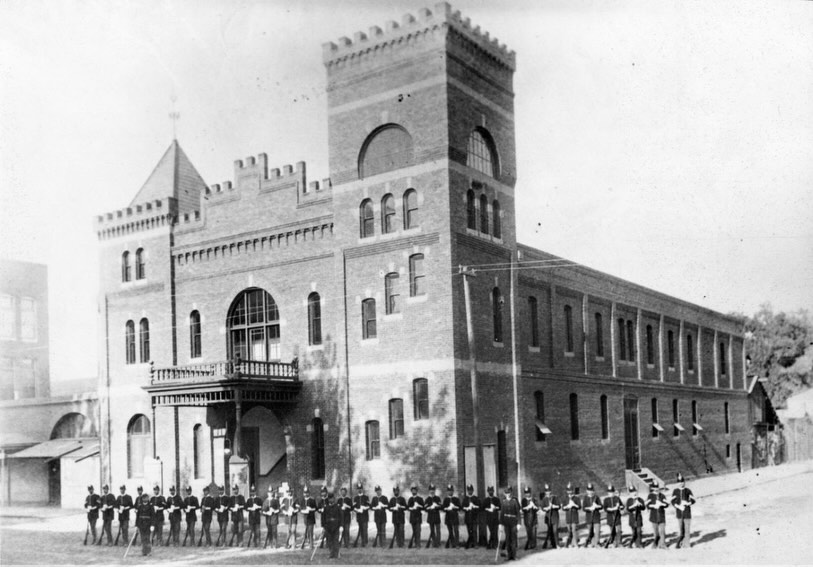
Built in 1889, the Armory served as both a community venue and home to the National Guard of California’s Company E, 6th Infantry Regiment which served from 1887 until 1907. Over time, the Armory evolved as the city evolved, hosting vaudeville shows, holding special events, and welcoming notable visitors and politicians.
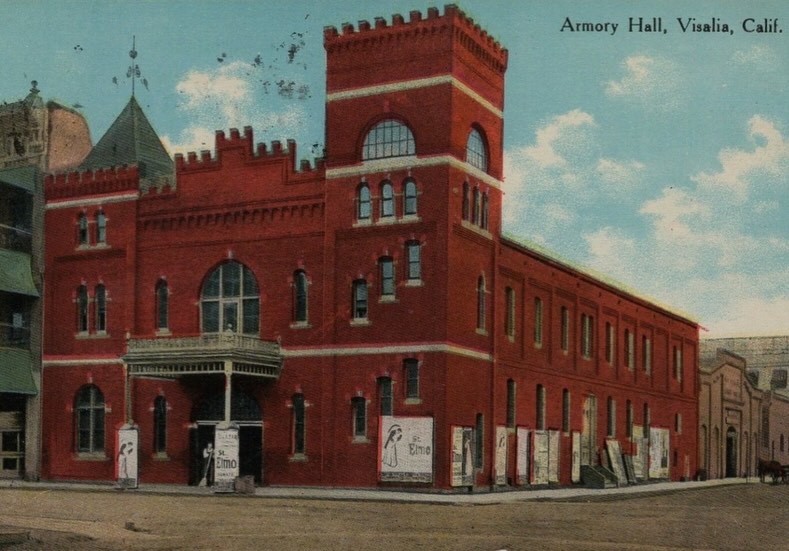
In 1914, after a major remodel, it became Theatre Visalia, a 795-seat playhouse that anchored downtown entertainment for years, later adapting to new forms of entertainment like silent films. The movie mogul William Fox purchased Theatre Visalia for his Fox West Coast chain in 1928. It operated as the first Fox Theatre in Visalia until the construction of the new Visalia Fox, which opened in 1930 on the northwest corner of Main and Encina. The last ‘talkie’ film was shown at the old theater on February 26, 1930, the day before the new Fox held its grand opening and showed its first film.
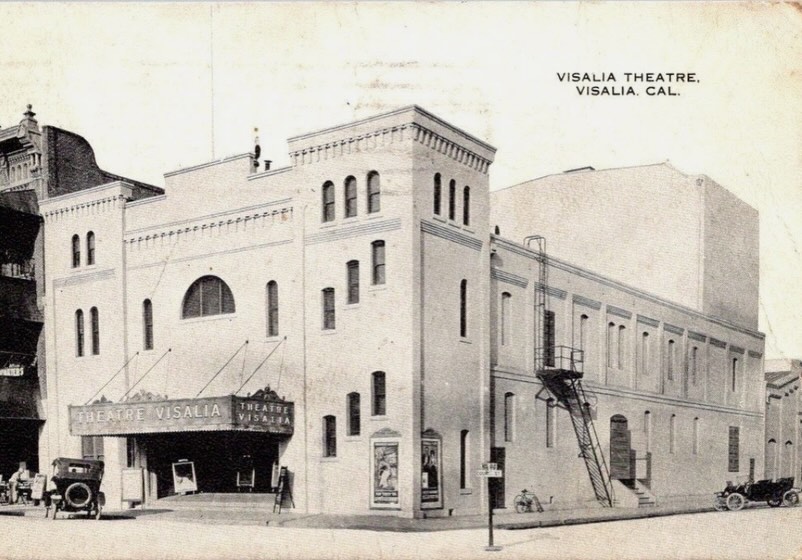
The old Armory/Theatre Visalia building was demolished in 1936. Though it’s gone today, it remains an important part of Visalia’s downtown story.
VISALIA TEA GARDEN
After 14 years in business, C.L. Young, Visalia Tea Garden proprietor, razed his old building on Main Street in order to construct an entirely new building in the same location. The new Tea Garden, equipped with every modern convenience and furnished in true Chinese fashion, held it’s grand reopening on September 24, 1936. Retaining all their old staff, the restaurant continued to offer only the finest Chinese foods sourced from locals Chan Bros. Produce and Gong’s Market.
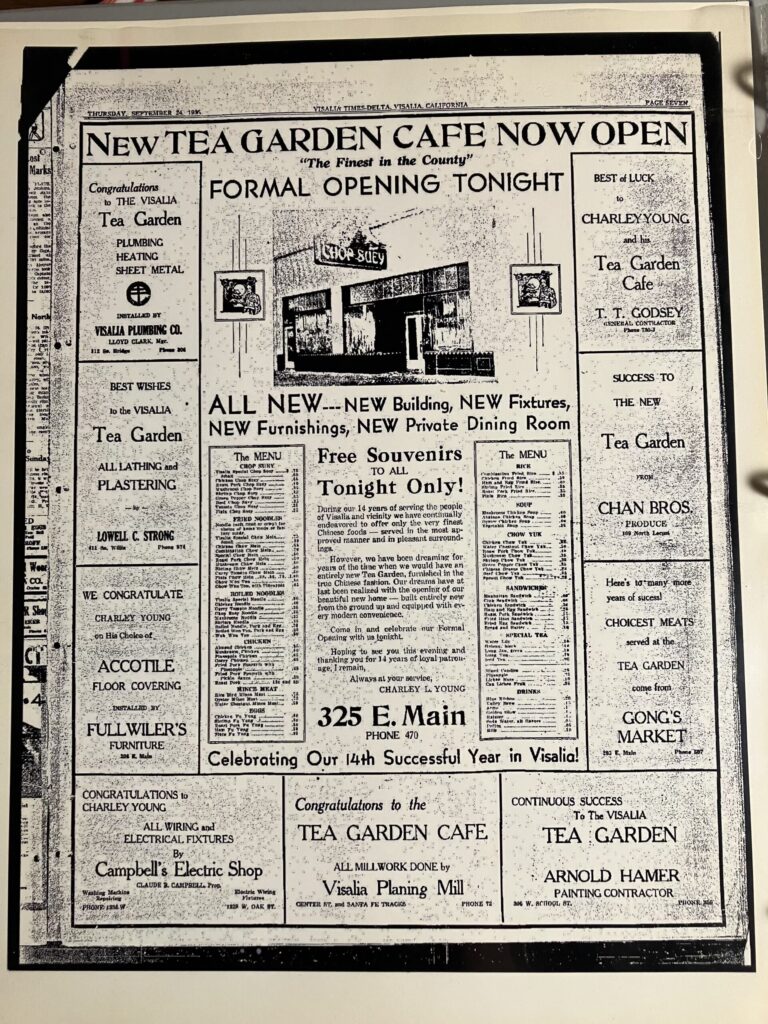
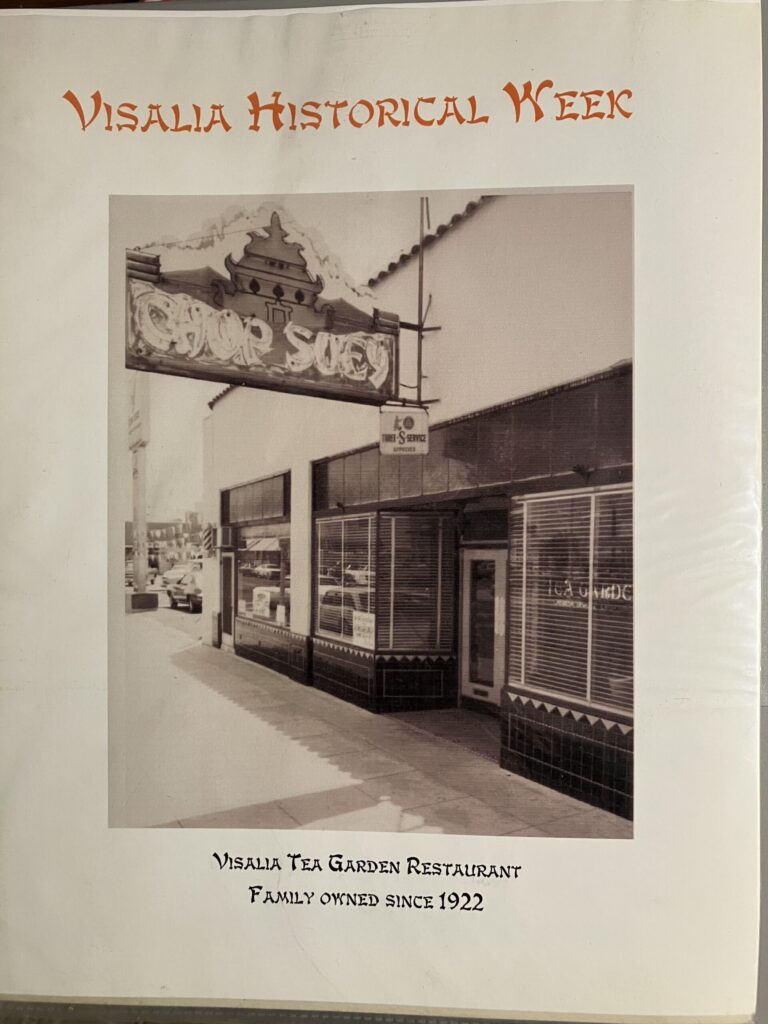
The new restaurant boasted a separate banquet room that could accommodate parties of up to 50 people. The large spacious kitchen had all the most modern equipment necessary for the preparation of delicious Chinese foods. The cooking stove and table was approximately 20 feet long and a large commercial refrigerator kept food in first class condition at all times. An automatic ice water tank provided a continuous supply of cold water. The basement included a large storing room and noodle-making room.
All local labor was employed for the building’s construction including painting by contractor Arnold Hamer, millwork by Visalia Planing Mill, electrical by Campbell’s Electric Shop, floor covering by Fullwiler’s Furniture, plastering by Lowell C. Strong, and plumbing by Visalia Plumbing Co. In addition, all equipment was purchased locally except for one item purchased through a Tulare County agent.
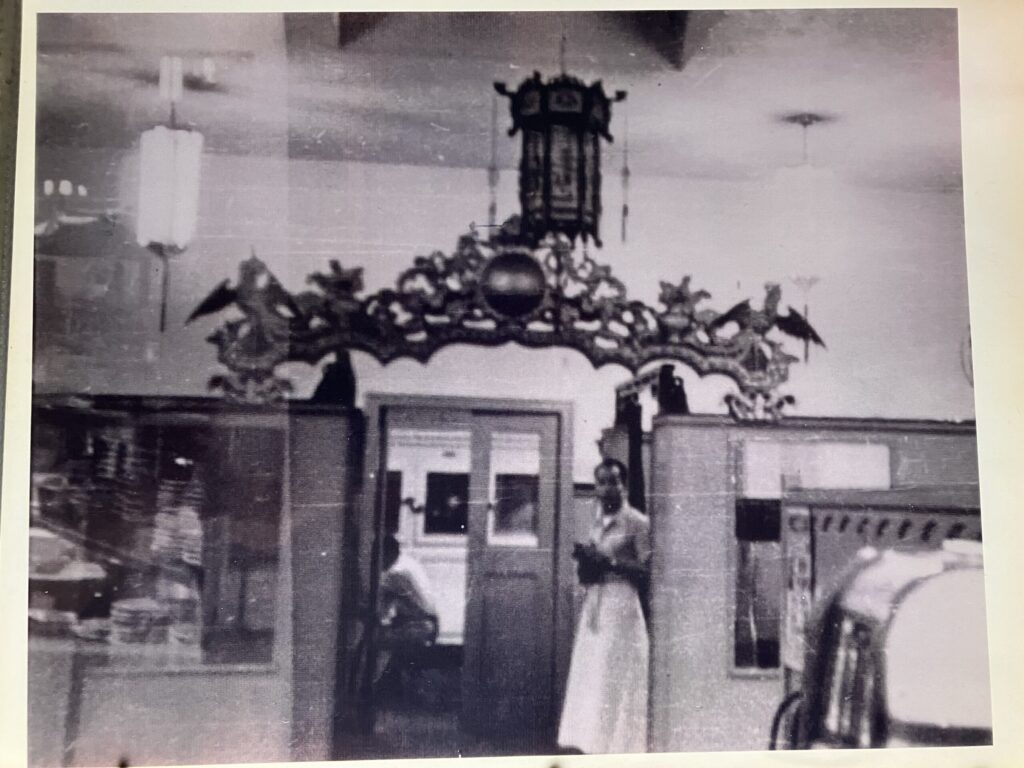
Furnishings included Chinese paintings, hand-worked art, and wares. One of the most interesting pieces was the hand-carved antique Chinese arch that hung over the hall leading into the kitchen.
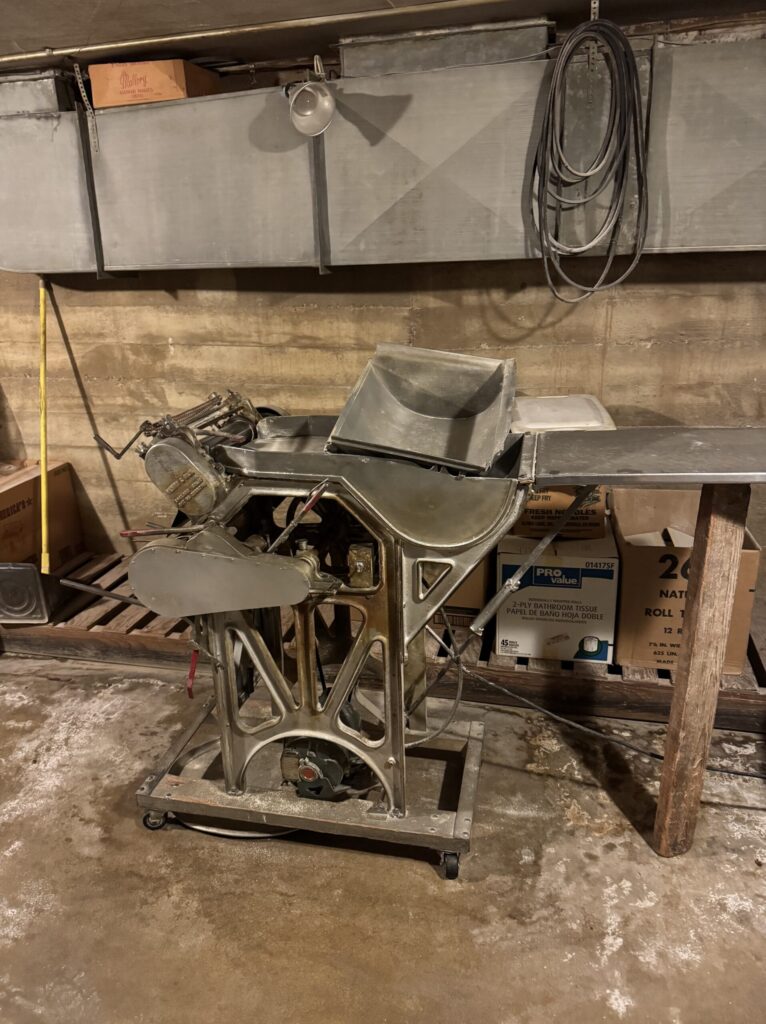

This noodle machine was one of the modern conveniences added with the new building. The noodle machine patented by Henry Chan Mun of Oakland, California, under US Patent No. 2,165,718, was designed to revolutionize small-scale noodle production. At the time, large noodle-making machines were expensive and used only by major manufacturers. Mun’s invention provided a compact, affordable alternative for small businesses. The machine mixed the dough, flattened it into uniform thickness, and cut it into noodles. This machine was a major innovation for it’s time and greatly improved noodle-making efficiency at the Visalia Tea Garden.
CITY HALL THEN AND NOW
Long before today’s City Hall…
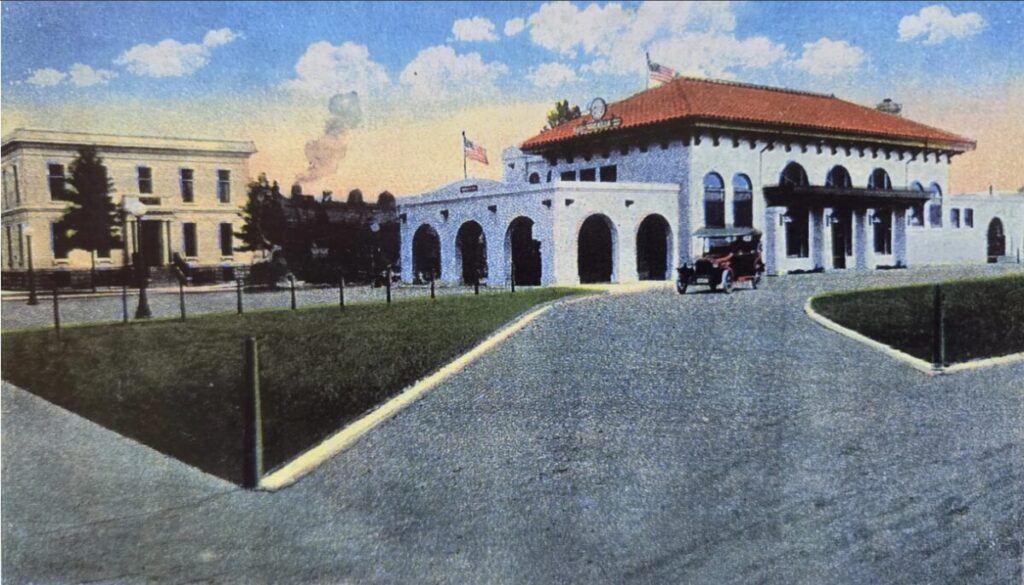
This postcard image shows Visalia’s second City Hall, built in 1909 in the Mission Revival style, which replaced an earlier 1870 brick structure on the same site.
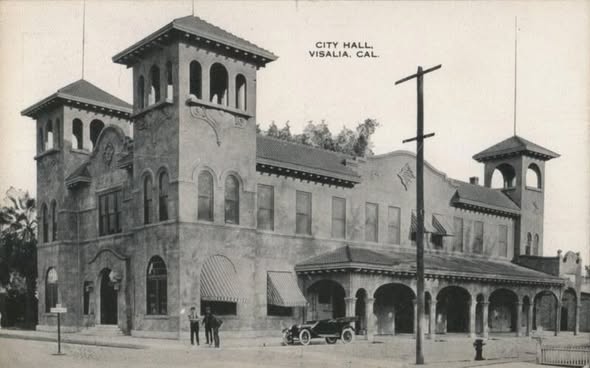
Formerly located at the southeast corner of S. Church St. and E. Acequia Ave. in downtown Visalia, the building served as the center of local government for decades.
With stucco walls, red tile roofing, and arched details, the structure reflected the Spanish-inspired architectural trends that were spreading across California at the time.
The building was demolished in 1972, and the site was later developed as the Visalia Convention Center.
Today, the new Visalia Civic Center now under construction incorporates similar Spanish-inspired design elements — a reminder that sometimes what’s old becomes new again.
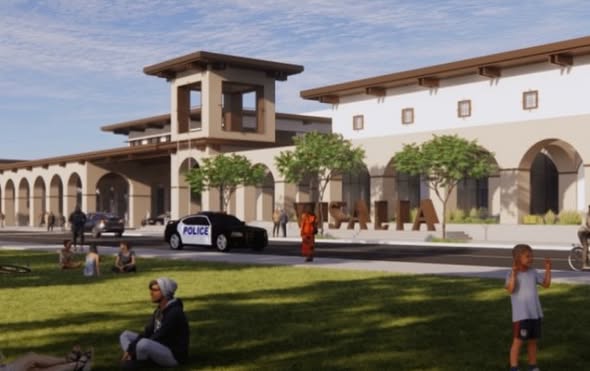
We can’t mention the different versions of City Hall without noting Visalia’s current City Hall, a striking Mid-Century Modern building that represents another important chapter in Visalia’s architectural history.
VISALIA FREE LIBRARY
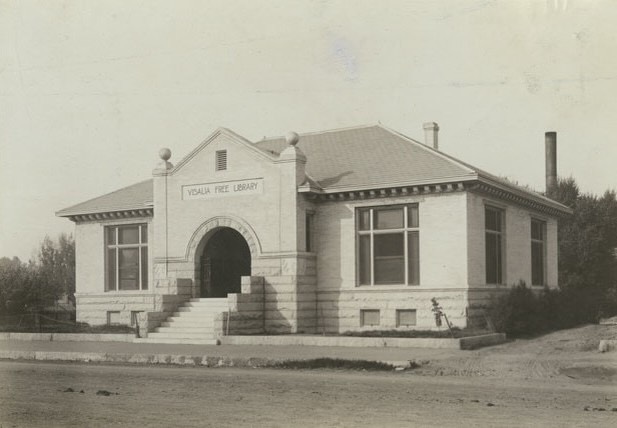
Before Visalia’s current library, there was the Visalia Free Library at the northeast corner of North Encina Street and West Main Street. It was built in 1904 with a grant from Gilded Age robber baron turned philanthropist Andrew Carnegie. Carnegie believed that free access to knowledge and learning strengthened communities, and his library grants helped towns build public libraries when many had none. Local leaders also committed to ongoing support, ensuring these libraries served the public for years to come.
The Visalia Free Library served the community until it was outgrown and demolished in 1936. While Visalia’s Carnegie-era building is gone, several nearby communities still have their original Carnegie libraries, including Exeter (now a community building) and Orosi, where the original Carnegie structure continues to operate as a branch of the Tulare County Library system.
MRS. SPALDING’S ELECTRIC CAR
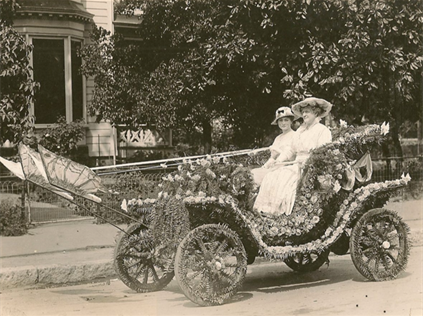
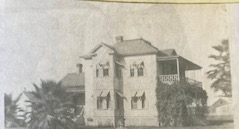
In 1904 a carriage building was constructed adjacent to the home, and complete with tack room, served as a stable for their horses and buggies. Later it was converted into a garage for their automobiles, which probably included Mr. Spalding’s Reo Roadmaster and Mrs. Spalding’s Baker, reportedly Visalia’s first electric car. Later the carriage building was made into a house with an address of 208 W. Grove Avenue.
TICKET TO RIDE
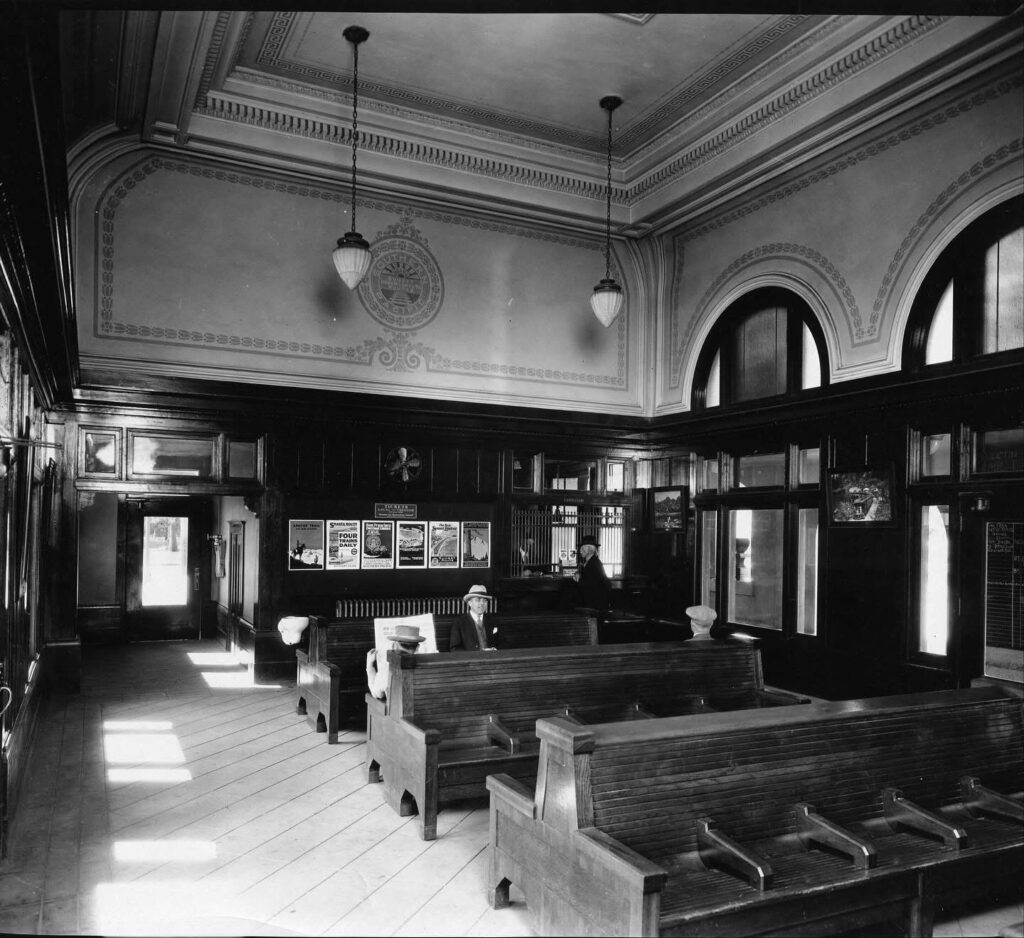
Step back in time to 1916!
This amazing photo shows the original waiting room of Visalia’s 1916 Southern Pacific Depot — complete with:
Original wooden benches
The ticket master’s cage
Milk glass pendant lighting
Hand-stenciled detailing featuring the Southern Pacific Railroad log
Period travel posters on the walls
William R. Spalding, a prominent Visalia lumberman, purchased the first ticket at the Southern Pacific Depot when it opened in September 1916. He bought a round-trip ticket to San Francisco.
Look closely and you’ll see a few men in the photo. Can anyone help identify them? It might be a long shot after a century, but we’d love to know!
Visalia Heritage is working to restore this historic depot and transform it into Visalia’s History Museum and Cultural Center.
VISALIA’S ORIGINAL SOUTHERN PACIFIC RAILROAD DEPOT
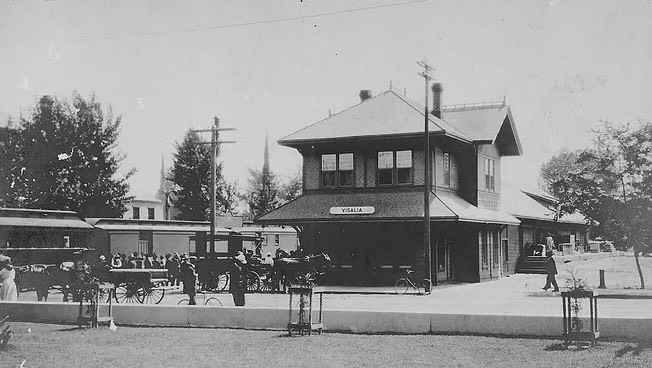
Here’s a rare look at Visalia’s original Southern Pacific Railroad Depot — a wood-frame, Victorian-era structure that once stood exactly where the 1916 Depot stands today.
As Visalia grew, this Depot was deemed too small. To make way for the new 1916 building, it was moved one block east, where it continued serving the community as a freight depot for several years.
In the lower portion of the photo, you can also spot original granite curbing — a historic feature that still surrounds our original courthouse square.
The horse-drawn buggies and waiting passengers remind us how central the railroad was to daily life in early Visalia. Though this building is gone, its story remains a key chapter in our city’s past.
Visalia Heritage is working to restore the 1916 Depot and create Visalia’s Museum and Cultural Center.
“All aboard, Visalia!”
WHERE IS IT NOW?
The Depot First Dedicated on Fourth of July, 1916
Visalia Morning Delta July 4, 1916 The formal dedication of Visalia’s new Southern Pacific depot will take place this evening at 8 p.m. with B.M Maddox of Visalia [newspaper publisher and Mt. Whitney Power Company] representing the city and H.R. Judah, assistant general passenger agent, at hand for the railroad company. During the exercises the depot will be in total darkness while the Visalia band plays several selections. The first ticket will be sold to Jas T. Boyer of the Visalia Board of Trades. According to Agent Lary, the ticket will be from Visalia to New York and return, Mr. Lary insisting that Mr. Boyer return. The hour of 8 o’clock has been selected as the most appropriate, the lighting effect of the depot being quite elaborate. Visalia will readily respond to this dedication as the depot is now a reality, and they appreciate it as one of the finest in the valley. When the parking is completed and the paving done, the structure will show up even larger and more auspicious that it does now. A separate story told about the elaborate Fourth of July activities planned: The headline said rooming houses and hotels were crowded to the limit. The day would begin at 9 a.m. with the Visalia band playing. There would be a baseball game against the Bakersfield Elks and patriotic activities in the new auditorium (the Visalia Municipal Auditorium on the northwest corner of Acequia and Garden, which would be dedicated at a later date, so as not to detract from the depot opening). There would be a carnival on Center St. and a 150-mile road race with a purse of $1,800. There were 14 entries. The day would also celebrate the completion of the new state highway between Hanford and Visalia. Hanford was going to close down almost entirely so those from Hanford could come to Visalia and hold a twin-city celebration. Then there would be another band concert in the business section, the official opening of the depot, and a dance in the new auditorium. The newspaper called it “one of the best Fourth of July programs in years, despite the militia boys going away.” |
DOWNTOWN POST OFFICE HAS MANY UNIQUE MOTIFS
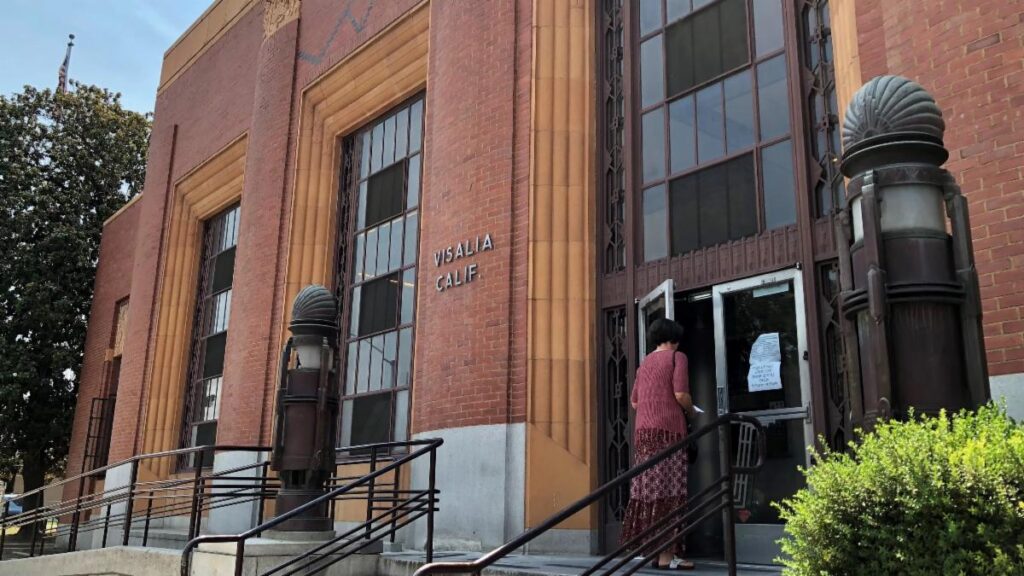
Downtown Visalia’s historic post office was built from 1932 to 1933 as a part of the New Deal’s mission to create infrastructure by putting people to work during the Great Depression. It is famous for its unique Art Deco style.
It is a great example of the high-quality work done during the Depression by the Works Progress Administration (WPA). Many government buildings from that time were built with incredible attention to detail and craftsmanship, providing jobs and lasting structures for communities.
Decorative dark-brown brick contrasts the light-tan brick used for the bulk of the building’s walls. Nature motifs include eagles, plants, flowers and sunrises. The interior ornamentation is lavish, including cast aluminum, marble and a decorative multi-colored floor.
The construction was highly labor-intensive, as seen in the careful masonry, the elaborate terrazzo floor, and the use of parquet rather than strip flooring in the workroom and office areas.
When local historian Terry Ommen does his Downtown tours, he always points out the large unique lanterns on either side of the front door. He has tried to find out who created them but hasn’t had any luck.
MAIN STREET MERCHANTS 1950’s
Downtown Visalia actually had more retail space in the 1950s that it does today. That information comes from William Martin, Downtown property owner who owns Montgomery Square on Main Street (the original Montgomery Wards) and used to own the once famous Palace Hotel on the corner of Main and Court streets.
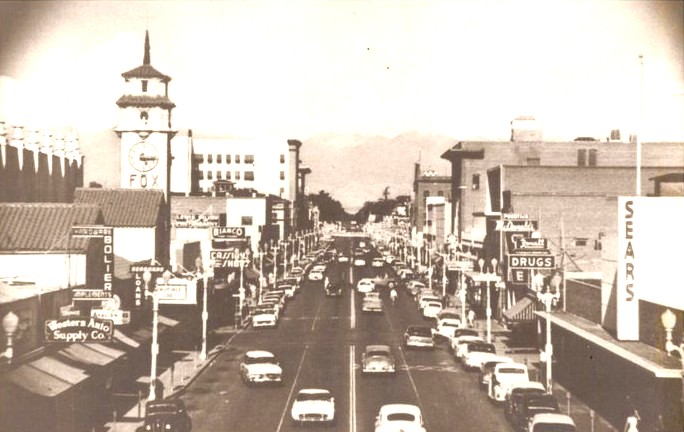
In the 50s, all businesses were Downtown—Pennys, Sears, Wards, and Woolworths. Then the Visalia Mall opened on Mooney Boulevard in 1964, the first enclosed shopping mall in California. The big box stores moved out.
“Downtown almost died,” said William. He and a group of local merchants came together to reinvent the Downtown retail climate. Smaller boutique shops opened, and Downtown became known for its quality restaurants.
The big box buildings were subdivided into small shops and some of that space was turned into much-needed parking, which is why there is less retail space now.
Because of the local business commitment, Downtown Visalia not only survived but flourished. Today, it is recognized as one of the most successful downtown districts of its size in California—alive with restaurants, shops, entertainment and community pride—often called “The Jewel of the Valley.”